Key Takeaways
The landscape of modern defense is being fundamentally reshaped by autonomous systems. Here are the five most critical shifts occurring in 2026:
- Software-defined autonomy is becoming the primary driver of tactical performance.
- Commercial hardware is outpacing bespoke government projects in speed and innovation.
- Edge processing allows drones to execute complex missions without continuous network connectivity.
- Integration between private startups and established defense contractors is accelerating hardware deployment.
- Data-driven decision support is replacing manual reconnaissance to reduce personnel risk.
Defining the landscape of dual-use technology in 2026
Evolution from classical definitions to AI-enabled hardware
The traditional concept of dual use technology has shifted from purely mechanical or infrastructure-based goods toward software-centric, algorithmically hardened assets. In 2026, the distinction is no longer about the item itself but about the capability it provides when paired with advanced machine learning. Systems that monitor natural disasters now translate effortlessly into tools for strategic reconnaissance, proving that the boundary is largely defined by the application layer rather than the hardware design.
Primary sectors driving the mass adoption of dual-use systems
Autonomous aerial systems have moved beyond niche experimental trials to become foundational elements in both logistics and security. By leveraging autonomous systems for high-stakes tracking and delivery, sectors that previously required massive human oversight are observing unprecedented gains in reliability. This convergence is visible across high-throughput supply chains and protective utility monitoring.
Assessing the shift from military-first to commercial-first R&D
Historically, defense initiatives dictated the pace of innovation, but the current defense tech funding surge reveals a reverse trend where commercial demand drives progress. Many of the most advanced sensor suites and navigation models currently serving defense needs were refined in competitive consumer sectors first. This shift allows for faster iteration cycles and cheaper, more robust production models compared to legacy acquisition processes.
Economic drivers behind the convergence of defense and civilian tech
Capital allocation today is prioritizing platforms that promise high scalability across both private energy grids and national security sectors. By reducing R&D redundancy, investors see clear value in companies that prove their algorithms can handle both precise mapping for civil infrastructure and threat detection for maritime security. The strategic efficiency of shared dual-use platforms provides a compelling economic case for modernizing defense infrastructure through commercial partnerships.
Technical pillars of autonomous drone architectures

Integration of high-performance computer vision for edge processing
Modern drone architectures rely heavily on onboard compute to process high-resolution visual data in real-time. By moving logic from clunky, latency-prone cloud links to local hardware, systems can identify anomalies in seconds. This local processing ensures that drones remain functional even in environments where external communication is compromised.
Swarm intelligence and distributed communication protocols
Coordinating dozens of assets requires more than a central pilot; it requires decentralized communication that mimics swarm biology. These swarm nodes share local data to maintain a unified map, ensuring the group can adapt if individual segments fail. The following table highlights the operational advantages of moving toward distributed intelligence compared to traditional centralized fleets.
| Capability | Centralized System | Distributed Swarm |
|---|---|---|
| Latency | Moderate to High | Low to Minimal |
| Resilience | Single Point of Failure | High Redundancy |
| Scaling | Limited by Bandwidth | Extremely Scalable |
Advancing resilience against signal jamming and GPS spoofing
Resilience in denied or hostile electronic environments is currently the foremost development priority for autonomous platforms. Instead of relying purely on global navigation signals, drones utilize vision-based odometry and inertial navigation to maintain course integrity. This shift in hardware design prevents operators from being blinded by the simple signal manipulation techniques that characterized early-decade vulnerabilities.
Scaling real-time AI-driven path planning in complex environments
Navigating dense urban or industrial environments requires systems that can anticipate movement and adjust paths with millisecond precision. By training models in simulated environments before physical field testing, engineers have drastically improved the safety and agility of these platforms. The software-first approach ensures that pathing algorithms remain sharp without requiring iterative physical prototyping that would slow production timelines.
Applications in commercial logistics and critical infrastructure

Automated disaster response and rapid aerial mapping
Rapid aerial mapping provides immediate situational awareness following natural disasters, enabling authorities to allocate resources efficiently. These systems produce high-fidelity maps that identify blocked routes or broken power lines long before ground crews arrive. This kind of data integration effectively solves the information gap that typically hampers initial response phases.
Real-time surveillance for large-scale utility and facility protection
Facility security has been completely transformed by the integration of autonomous aerial watchers that perform standard route patrols. By automating the visual and thermal checks of massive piping systems or perimeter fences, operators can focus their attention on genuine security alerts. These persistent monitoring capabilities are crucial for ensuring the uptime of geographically dispersed infrastructure while also managing operational costs.
Mitigating supply chain risk through autonomous remote monitoring
Autonomous monitoring now extends into the logistics chain, where drones track inventory and equipment health in real-time. By connecting sensor data directly to enterprise management systems, firms can anticipate maintenance needs without manual site visits. This level of asset information control effectively prevents the ripple effect caused by unmaintained record systems or unexpected hardware failures.
Cloud-based fleet management and coordination for multisystem operations
Managing a fleet across multiple locations requires robust software that aggregates data into a single, actionable interface. Modern tools now allow for seamless remote deployment, ensuring that teams can view and command units from any secure location globally.
- Automated pre-flight check rituals
- Dynamic re-routing based on weather changes
- Live fleet status reporting for stakeholders
- Centralized firmware updates across hardware generations
Impact on national security and modern defense strategy
Reducing human operational risk during high-threat reconnaissance
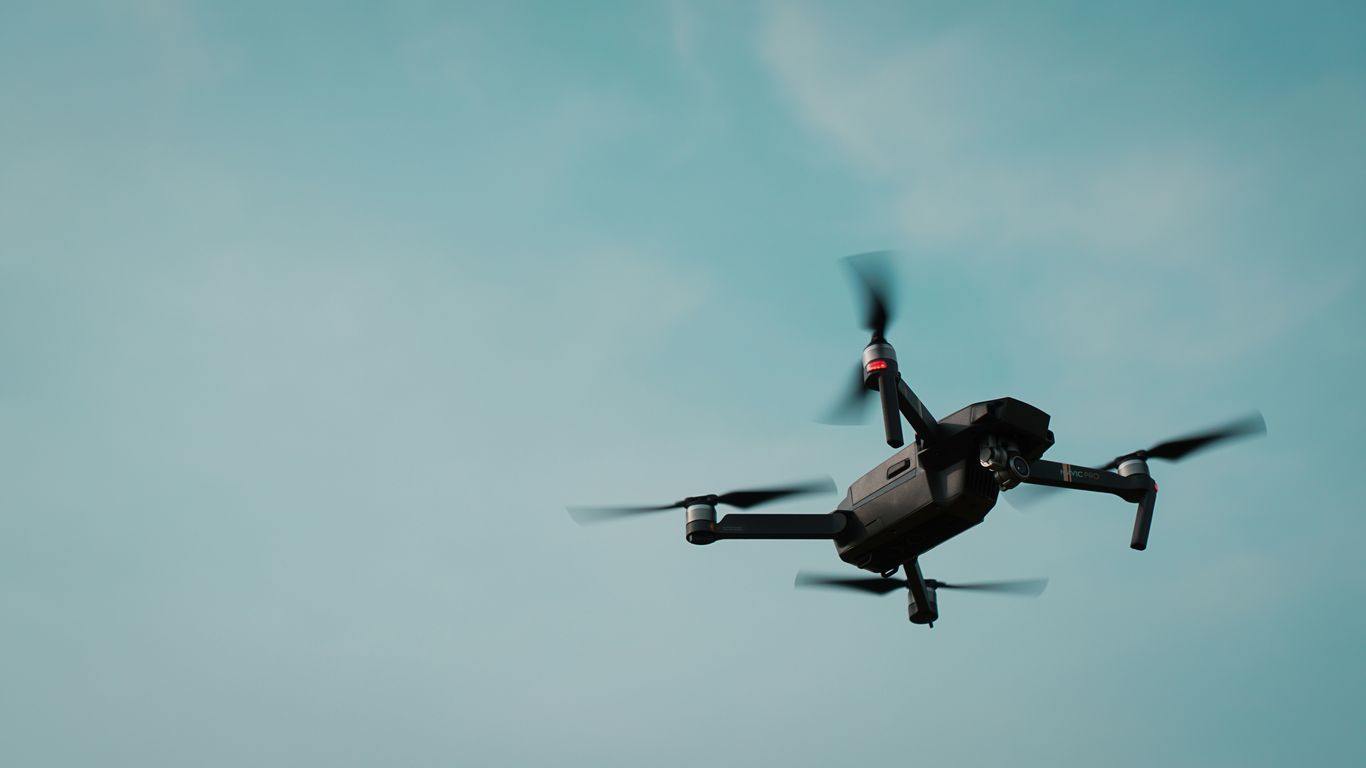
Replacing personnel with autonomous systems in high-risk zones is the most significant tactical evolution in recent defense strategy. These units can linger in contested airspace, gathering intelligence that was previously impossible to acquire without risking human lives. The resulting data stream provides officers with an unprecedented level of detail regarding the terrain and potential threats.
Enhancing situational awareness for border and maritime security
Persistent surveillance across expansive borders requires automated persistence that humans simply cannot sustain. By using long-endurance drones equipped with thermal and visual sensors, authorities maintain a continuous operational picture. This persistent coverage acts as a deterrent and a primary indicator for potential security breaches that require manned intervention.
Developing counter-drone technologies and active defensive protocols
Defense labs are racing to develop counter-systems capable of neutralizing unauthorized aerial traffic in restricted zones. This includes electronic neutralization and directed energy options designed for swift, surgical intervention. Integrating these defensive layers directly into existing security networks is essential for protecting sovereign airspace without triggering wide-area disruption.
Enabling interoperability between defense contractors and agile startups
Modern defense is becoming a collaborative effort where legacy aerospace manufacturers integrate software stacks managed by agile tech firms. This interoperability ensures that platforms remain updated with the latest AI advancements without needing a total rebuild of the underlying airframes. The best robotics companies are currently proving that quick integration is the key to maintaining a competitive stance in rapid-cycle defense evolution.
Navigating the regulatory and geopolitical landscape
Managing global export controls for dual-use AI components
Export regulations have become significantly more granular, forcing firms to account for which model weights or processing capabilities enter international jurisdictions. Navigating these AI chip export controls requires rigorous end-user verification and compliance audits. The goal is to balance the freedom of innovation with the necessity of keeping critical AI-hardware from potentially harmful actors.
Balancing ethical autonomy standards with kinetic defense requirements
There remains an uncomfortable tension between designing systems that can act independently and ensuring those systems never violate established humanitarian standards. Most institutional research now focuses on human-in-the-loop workflows where the AI provides the target assessment, but the final authorization remains firmly in human hands.
Establishing compliance frameworks for private-sector defense initiatives
As more startups enter the defense sector, the need for standardized safety and ethical frameworks has reached a breaking point. These frameworks are designed to align private innovation with national security mandates without stifling the speed of agile development. Clear guidance on what constitutes a permissible defense project versus a prohibited one has provided the clarity many firms lacked in the early testing years.
Protecting proprietary innovation while meeting national security mandates
Companies must secure their trade secrets while also exposing enough data to satisfy government security protocols. Balancing extreme intellectual property protection with transparent audit trails is a major operational hurdle. Those that manage this balance gain an immense advantage in securing long-term government contracts.
Market trends and investment projections for 2026
VC funding patterns for high-growth dual-use technology startups
Investors are shifting their focus toward companies that exhibit verifiable performance in simulation and physical testing. The current VC climate favors metrics-driven growth over broad promises of industry disruption. Funding is concentrated in firms that offer clear paths to commercial profitability alongside their government pipelines.
The role of government-backed defense incubators in market maturity
Government-backed incubators have served as a vital bridge for startups navigating the complex bureaucracy of acquisition. By provided seed capital and access to standard testing environments, these programs allow companies to develop from concepts into mature firms that can compete for major contracts.
Strategic partnerships between software firms and aerospace manufacturers
Integration between specialized software startups and large-scale hardware manufacturers is the defining feature of the 2026 fiscal year. This partnership model allows aerospace giants to leverage advanced data analytics while smaller software firms scale their presence in massive physical deployment projects.
Forecasts for the global defense-tech market in the coming fiscal year
Market experts anticipate continued growth in software-defined autonomous systems as nations modernize their fleets. The expectation is that the industry will prioritize scalability and total cost-of-ownership reliability over extreme performance benchmarks. This shift toward sustainable, repeatable defense-tech deployment will define the next phase of global market expansion.
Conclusion
The convergence of AI-driven autonomy and physical hardware has fundamentally shifted the baseline for both commercial logistics and national defense. As we enter the next stage of deployment, the focus must remain on balanced integration, regulatory compliance, and protecting the core innovations that secure our strategic future.
Frequently Asked Questions
Why is the concept of dual-use technology becoming more complex?
As software becomes the primary differentiator in hardware performance, it is difficult to distinguish between systems designed for beneficial research and those capable of harmful application.
How do autonomous systems handle navigation in denied communication areas?
They utilize robust onboard processing and inertial navigation systems, which allow the drone to calculate its position without relying on external GPS or cloud-based data feeds.
What are the main challenges to scaling autonomous defense solutions?
Key challenges include the complexity of integrating new software into legacy hardware, strictly navigating international export controls, and ensuring that ethical autonomy standards are maintained throughout the design process.
How does AI-driven path planning improve operational safety?
Artificial intelligence allows drones to predict environmental hazards in real-time, drastically reducing the chances of collision in complex, unstructured landscapes compared to older manual or pre-programmed methods.
What role do startups play in the modern defense ecosystem?
Startups bring the speed of consumer tech innovation to the defense world, often outpacing established contractors in terms of rapid prototyping, specialized software development, and iterative hardware refinement.
Why does the industry prioritize edge processing in drones?
Processing data locally on the device eliminates reliance on high-latency networks, ensuring that drones can maintain mission integrity and responsive navigation even during a loss of communication.
Are current regulatory frameworks sufficient for these advancements?
Regulation is currently evolving to catch up with the pace of innovation, with many nations establishing new compliance frameworks designed to protect proprietary technology while simultaneously addressing modern national security concerns.