Key Takeaways
Diligent Robotics has pioneered a niche in hospital service automation by focusing on human-centered AI that assists clinical staff. The Moxi robot serves as a logistic bridge between supply rooms and patient care, aiming to reduce the burden of manual tasks. By integrating with existing healthcare infrastructure, these systems are beginning to reshape how hospitals manage their limited staff resources. However, as hospital automation progresses, the industry must navigate significant ethical, privacy, and technical hurdles. Future growth in this sector depends on balancing the speed of technological deployment with the necessity of maintaining robust, safe clinical environments.
- Improved efficiency in hospital logistical tasks.
- Enhanced nurse retention through reduced administrative load.
- Advanced AI-based navigation for dynamic human spaces.
- Commitment to privacy and secure sensor integration.
- Strategic shifts indicating broader healthcare market consolidation.
Overview of Diligent Robotics' mission
Diligent Robotics operates with the core mission of creating socially intelligent robots capable of working alongside human teams in complex environments. By prioritizing the development of AI that understands the nuances of human interaction, the company seeks to assist in alleviating burnout among clinical professionals. This approach moves beyond simple transport to enable machines that recognize, navigate, and support the workflow of a hospital shift.
Focused healthcare automation
Healthcare automation at Diligent Robotics is designed to address the specific cognitive and physical overloads faced by frontline staff. Rather than replacing the human element, the technology aims to automate the "background" infrastructure of a hospital floor, such as supply delivery and stock logistics.
Founding by Vivian Chu and Andrea Thomaz
Founded in 2016, the company rests on the research expertise of Vivian Chu and Andrea Thomaz, who bridged the technical gap between human-robot interaction and real-world clinical application. Vivian Chu has been recognized for her leading role in developing the sensory foundation for these machines, ensuring they can operate within unpredictable human-filled spaces.
Funding and corporate trajectory
Tracing the path from a startup to an industry-recognized entity, the company has successfully navigated both private capital and strategic growth phases. For those tracking professional opportunities, Diligent Robotics careers offer insight into how the team recruits talent to scale its sophisticated robotic systems across larger hospital networks.
Key features of the Moxi robot

The Moxi robot is specifically engineered as a hospital service assistant that learns and adapts to existing hospital workflows. It features a unique AI software foundation that utilizes multimodal sensor arrays, including visual, auditory, and haptic systems, to interpret its surroundings. The result is a platform that can operate continuously in crowded, semi-structured hallways while interacting safely with human staff and patients alike.
Social intelligence and non-verbal communication
Moxi utilizes integrated sensors to interpret social cues, which allows it to move through busy wards without causing disruptions. By providing non-verbal feedback like subtle movements or light cues, it keeps staff informed of its actions and destination.
Autonomous navigation in hospital hallways
Operating in dynamic settings represents a major challenge for mobile robots, yet Moxi manages this through a sophisticated mapping and localization software architecture. It continuously logs its paths to adapt as hospital floor plans or equipment placements change month to month.
Integrations with electronic health records
Integration remains a critical piece of the workflow efficiency puzzle. The following table highlights how core system components facilitate hospital operations:
| Feature Category | Primary Function | Clinical Benefit |
|---|---|---|
| EHR Connectivity | Data update syncing | Automated logging of supply delivery |
| Sensor Feedback | Real-time obstacle avoidance | Minimized risk in sterile corridors |
| Fleet Management | High-volume deployment | Coordinated traffic across multiple floors |
These technical integrations allow the hospital backend to remain updated on supply chain movements without requiring additional manual input from nursing staff.
Operational impact on clinical staff
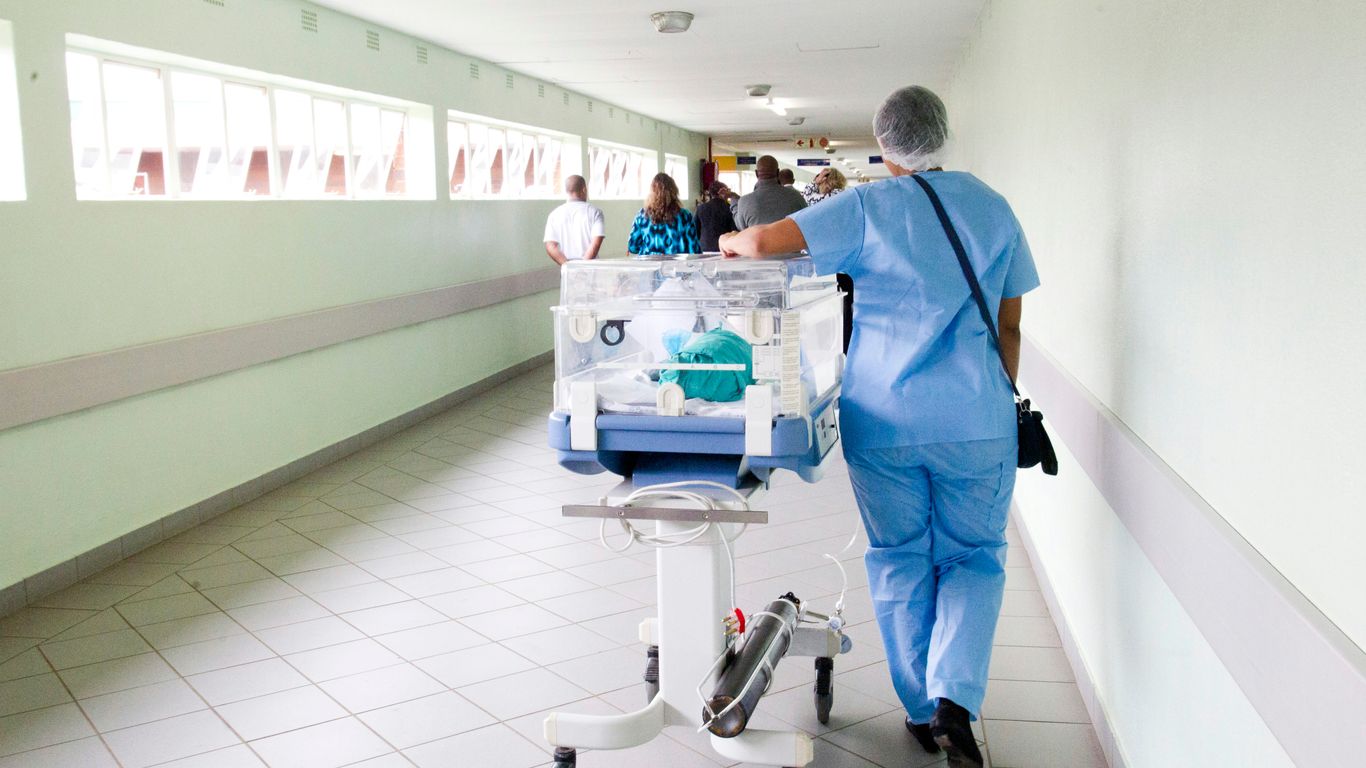
The introduction of Moxi has proven that specialized robotics can decrease the physical strain often associated with nursing roles. By offloading tasks such as gathering supplies, transporting lab samples, or picking up PPE, the system provides vital hours of relief during a standard clinical shift. When nurses gain time back, they are better able to focus on direct patient outcomes rather than administrative logistics.
Reducing non-nursing tasks for nurses
Nurses spend a significant portion of their shift on non-care activities, which contributes to overall workplace fatigue. Automating these repetitive logistical tasks represents a fundamental improvement in work environment safety and professional satisfaction.
Workflow efficiency in hospital logistics
Operational gains are felt across the entire department rather than just individual roles. Hospitals that have implemented these systems report improvements in:
- Consistent delivery of time-sensitive medications to nurses.
- Reduction in the physical distance covered by staff per shift.
- Improved inventory management within supply closets.
- Enhanced reliability of medical equipment transport between departments.
These gains are not just anecdotal; they reflect a structured shift toward a more responsive hospital environment that anticipates need rather than reacting to it under stress.
Staff perception and human-robot interaction
Human-robot interaction in medical settings relies heavily on building trust and reliability. Through consistent presence on the floor, the staff shifts from viewing the device as a novelty to accepting it as a dependable team member.
Challenges and ethical considerations
Deploying robots in clinical settings requires careful scrutiny regarding patient privacy and data governance. Moxi utilizes multiple sensors, raising immediate questions about how visual data is processed and stored within a facility. Transparency is key to maintaining trust, as users are often required to apply a Non-Negotiable Algorithm for weighing efficiency benefits against any potential risk to data sovereignty.
Privacy concerns regarding sensors and cameras
Maintaining the balance between situational awareness and patient privacy is an ongoing challenge. Rigorous data handling protocols are necessary to ensure that sensory inputs do not compromise the dignity or confidentiality of those in treatment areas.
Technical limitations in dynamic clinical environments
Even with highly capable systems, external environment factors like high-speed emergency protocols or hardware failures pose limitations. Maintaining performance requires, in turn, frequent software updates and physical component maintenance.
Employment impacts and long-term workforce shift
Long-term workforce impact remains a complex topic, touching on fundamental questions regarding the future of care. While automation takes over mechanical tasks, it creates a demand for new technical skill sets among hospital personnel who shift their focus towards monitoring and optimizing robotic system uptime.
Future outlook and market position
The market for healthcare robotics is undergoing a rapid evolution as solutions mature from experimental trials to standard infrastructure. This sector's progression is supported by shifts in healthcare innovation trends, which emphasize long-term patient recovery and modernized hospital operations. Understanding the total competitive landscape is essential for stakeholders evaluating the durability of these systems.
Industry consolidation and recent acquisitions
Significant industry moves highlight the maturing nature of this space, such as Serve Robotics' acquisition of Diligent Robotics to expand their logistical footprint in indoor environments. Such M&A activity typically signals that the technology has achieved a level of validation that makes it attractive for larger, integrated platforms.
Scaling hardware maintenance for global hospitals
Scaling operations requires a global infrastructure for hardware service, maintenance, and support. As deployment spans across more facilities, companies must grapple with the challenges of keeping a decentralized, complex robotic fleet online 24/7.
Competitive landscape in healthcare robotics
While the competition is fierce, the primary challenge remains the adoption curve within healthcare systems. The ability to successfully demonstrate ROI for logistics remains the definitive metric for long-term survival in the professional robotics market.
Conclusion
Diligent Robotics has established a meaningful path forward by addressing the concrete, day-to-day challenges of clinical logistics. As Moxi continues to integrate into the modern healthcare stack, its success will depend on managing the tension between rapid technology deployment and the rigid requirements of hospital safety. The ongoing evolution of hospital automation signals that we are moving toward a future where human care remains the priority, supported by a resilient, intelligent logistical layer.
Frequently Asked Questions
How does robotic automation affect nursing workload?
Robotic automation aims to decrease the time spent on non-care logistical tasks, such as supply transport, which allows staff to prioritize face-to-face patient time rather than administrative duties.
Can service robots operate in crowded hallways?
Yes, these systems are equipped with advanced sensors and navigation algorithms that allow them to perceive human traffic and move through busy hospital corridors safely while adhering to facility rules.
What privacy protections exist for hospital robots?
Developers must implement strict data governance, ensuring that any visual or auditory data captured by a robot is either processed locally, anonymized immediately, or handled according to the highest industry standards for clinical privacy.
Is hospital automation reducing the need for human staff?
It is generally positioned as a tool for supporting existing teams rather than replacing them, specifically targeting burnout reduction and efficiency in tasks that are physically demanding but require little clinical judgment.
What are the main challenges to scaling these robots?
Scaling faces barriers including the need for robust hardware support, integration with legacy electronic records, and the operational effort required to adapt robotic maps to building-specific layouts.
How do hospitals justify the investment in robotics?
Justification usually centers on objective metrics such as time saved on logistics, reduced nurse turnover associated with burnout, and the overall improvement in floor-level workflow consistency.
How is the market for clinical robots changing?
The market is shifting toward consolidation and integration, where standalone robotic systems are being incorporated into larger healthcare technology platforms to provide a more comprehensive, centralized solution for hospital facilities.